Uni Jena Letter

Research Focal Areas

Interdisciplinary research at the University of Jena
Uni Jena Letter
Image: Jens Meyer (University of Jena)

The reseach focal areas at the University of Jena

The University of Jena's research focal areas arise from consistent interdisciplinary and cross-faculty collaboration and are systematically developed and strategically strengthened in cooperation with the profile areas.

They pool scientific expertise, promote innovative collaborations and support large-scale research activities with international visibility. The research focal areas are dynamic in nature: they respond to new scientific impulses, undergo continuous development and make a key contribution to the long-term profile of the university.
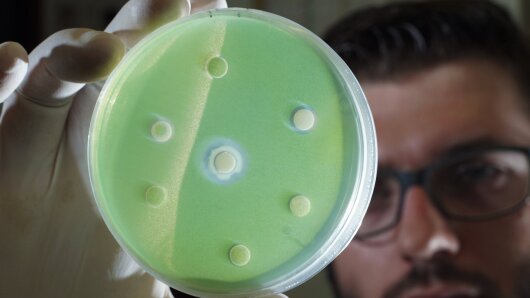

  • Testing the influence of bacterial extracts on the growth of algae.
    Image: Jan-Peter Kasper (University of Jena)
    Microbiome and infection biologyExternal link This research focus builds on the Cluster of Excellence Balance of the Microverse and investigates how microbial balance emerges, becomes disturbed and can be restored; the role of chemical signals in these processes; and how such signals affect microbial infection mechanisms. The interdisciplinary approach links microbiology, chemistry, physics, medicine, and data sciences. Cutting-edge methods such as mult-omics, high-resolution imaging, organ-on-chip systems, and AI-based modelling enable analyses from molecules to ecosystems.
  • Social imagining als a network of people and media
    Image: AI-generated
    Cultures of imagination This research focus explores the emergence, transformation, and impact of social imagining as a central cultural technique. Bringing together the humanities and
    social sciences at the FSU, it was awarded the EXC Imaginamics: Practices and Dynamics of Social Imagining in 2025. This trans-epochal research focus centres
    on the power and dynamics of ideas in social negotiation processes and cultural transformations, with emphasis on practices that enable imagining.
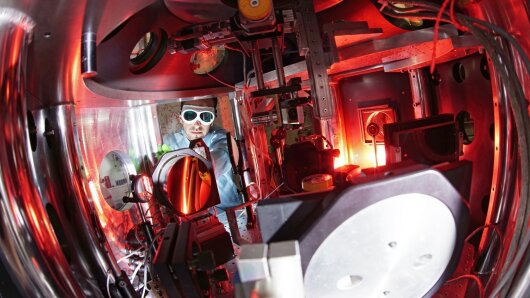
  • Lasersystem at Friedrich Schiller University
    Image: Jan-Peter Kasper (University of Jena)
    Photonics and quantum technologies This research focus explores the special properties of light as a tool, sensor and information carrier. It combines physics, chemistry, life sciences, computer science,
    and mathematics to develop new technologies for communication, energy, medicine, and production. Research is grouped in five topics: Laser physics and optical instrumentation, Quantum photonics, Nano-optics and photonic materials, Strong-field physics, Biophotonics.
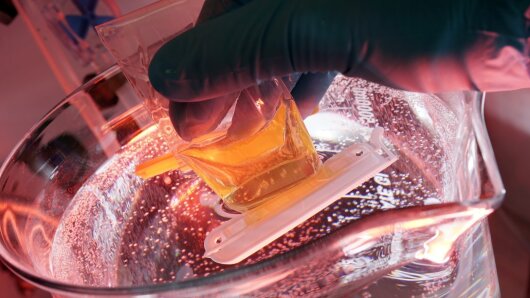
  • Materials for electrode production
    Image: Jan-Peter Kasper (University of Jena)
    Materials of the future Research in this focal area develops and investigates novel materials for key societal challenges. Natural and life sciences collaborate closely on functional polymers,
    carbon-based and hybrid materials, and innovative glasses. Digital and automated processes, supported by AI and ML approaches, are fostered to accelerate the design of sustainable materials for (nano)medicine, energy conversion and storage, and environmental technologies.
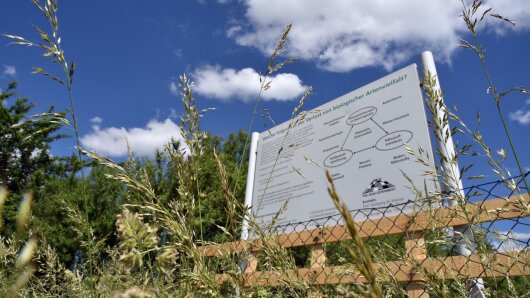
  • Biodiversity experiment The Jena Experiment
    Image: Anne Günther (University of Jena)
    Biodiversity and bio-geo interactions This research focus aims to understand the emergence,
    change, and preservation of biological diversity in close connection with geological, climatic, and ecological processes. The research focus makes an important contribution to sustainable ecosystem management, by bringing together the expertise from three faculties at the FSU, the German Centre for Integrative Biodiversity Research, the Senckenberg Institute for Plant Form and Function Jena, and partners such as the Helmholtz Centre for Environmental Research Leipzig/Halle.
  • Imaging of ageing
    Image: Laurence Mouton
    Ageing and health This research focus integrates interdisciplinary approaches to ageing and health across the human lifespan. It bridges research on molecular biological mechanisms, neuroscientific, and biopsychosocial approaches and clinical and health system care. Its aim is to extend health span, detect risks early, and develop innovative prevention and therapy strategies.
  • Demonstration
    Image: Leonhard Schönstein auf Unsplah
    Democracy under stress This research focus combines the university’s expertise in political science, sociology, communication sciences, psychology, contemporary history, economics of change, transformation studies, constitutional and public law to study the social, cultural and economic foundations of democracy, analysing the erosion of democratic structures and developing concepts to strenghten democratic resilience.