- Faculty of Social and Behavioral Sciences
South-Eastern European Studies
Study information
This page has been machine translated.
Key facts
- Degree
- Bachelor of Arts
- Supplement to degree
- major in a multi-subject bachelor’s programme
- Admission restriction
- without admission restriction (without NC)
- Duration
- 6 Semesters
- Credits/ECTS
- 120
- Teaching language
- German
- Tuition fee
- None
- Semester contribution
- € 305,05
- Start of studies
- Winter semester
- Part-time possible
- Yes
- Institutions
- Faculty of Arts
- Institute of History
- Institute of Romance Studies
- Institute of Slavic Studies and Caucasus Studies
Programme content
In South-Eastern European Studies, you will acquire in-depth knowledge of the complex linguistic, cultural and social interrelationships of the ethnic groups living in South-Eastern Europe in the past and present. The core disciplines are South Slavic Studies, Romanian Studies and East European History. Other subjects established at the University of Jena are involved in the teaching programme, in particular Political Science and Religious Studies.
You will familiarise yourself with, among other things:
- Methods of historical studies,
- Methods of linguistics and literary studies,
- methods of cultural studies,
- nationalism and ethnicity research,
- issues and methods of European ethnology and social anthropology,
- comparative and interdisciplinary issues and their processing methods.
In addition, language skills are taught in two languages in the major subject and in one Southeast European language(s) in the supplementary subject. Students can choose between Bulgarian, Serbian / Croatian, Romanian, Hungarian, Albanian, Turkish and Modern Greek.
Structure
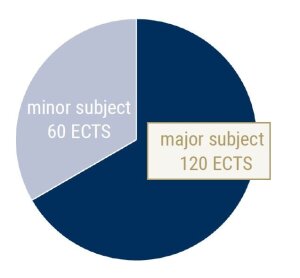
Multi-subject bachelor’s programme
Picture: Sophie BartholomeThe Bachelor's degree is the first professional qualification. The standard period of study|regular programme length is six semesters in total, during which various forms of courses (e.g. seminars, lectures or tutorials) are offered for the individual modules.
A multi-subject Bachelor's degree consists of a major subject with 120 credit points (abbreviation: LP / 1 LP = 30 hours of attendance, preparation and follow-up work|follow-up activity, learning and assessed coursework and examinations) and a supplementary subject with 60 LP.
Why study in Jena?
- Friedrich Schiller University maintains numerous contacts with partner universities in Eastern, Central and South Eastern Europe where it is possible to stay abroad, for example Veliko Tarnovo University, Iasi University, Sofia University, Belgrade Institute of Literature and Art, Eötvös Loránd University Budapest and Belgrade University.
What can you do after your studies?
Career opportunities:
The best career prospects are in subject) areas|fields where, in addition to the specialist skills acquired, knowledge of the Southeast European region and its languages are in demand. There are a wide range of possible applications, for example in the reconstruction of the Balkan region as part of the EU's south-east enlargement. There are also opportunities in radio, television and print media, in political and economic national and foreign organisations, in cultural mediation, in the social sector, in the care of foreigners and adult education, in publishing, in literature and textbook publishing, in language teaching abroad and in tourism. After the master's programme, an academic career in this interdisciplinary academic field may also be an option.
Downloads and links for the degree programme
What are we looking for in prospective students?
- a special interest in the region of Southeast Europe
Admission requirements
-
University entrance qualification
A university entrance qualification, such as a general secondary school leaving certificate, is required for admission onto the study programme.
More information on university entrance qualifications can be found here.
-
Language requirements
two modern foreign languages and two Southeast European languages (core subject)/one Southeast European language (minor subject); proof by the time of registration for the Bachelor's thesis at the latest
Contatcs
Academic Advisory Service - Dr. Immo Rebitschek (Institute of History)
Room 106
Fürstengraben 13
07743 Jena
Google Maps site planExternal link
Academic Advisory Service - Prof. Dr. Thede Kahl (Institute of Slavonic and Caucasus Studies)
Ernst-Abbe-Platz 8
07743 Jena
Google Maps site planExternal link
Academic Advisory Service - Dr. Victoria Popovici (Institute of Romance Studies)
Room 424
Ernst-Abbe-Platz 8
07743 Jena
Google Maps site planExternal link
Academic Office for Student Affairs and Examinations (ASPA)
Bachstraße 18k
07743 Jena
Telephone hours:
Mondays and Fridays (9:00 – 11:00)
Wednesdays (13:00 – 15:00)
The ASPA is primarily responsible for students in the Faculty of Social and Behavioural Sciences, the Faculty of Arts and Humanities, and the Faculty of Theology.
Postal address:
Akademisches Studien- und Prüfungsamt
Fürstengraben 1
07743 Jena
Central Student Advisory Service
University Main Building / SSZ
Fürstengraben 1
07743 Jena
Google Maps site planExternal link
Office hours:
We offer consultations in person, by telephone, and via Zoom. You can make an appointment by calling us on +49 3641 9-411111 (Mondays to Fridays from 9:00 to 11:00) or outside these office hours on +49 3641 9-411200. You can also use our remote help desk.
Consultation hours:
Mondays, Tuesdays, Thursdays and Fridays (9:00 to 12:20), Tuesdays (14:00 to 18:00), and Wednesdays and Thursdays (14:00 to 16:00).
Video chat: To the video chat – Zoom Videochat ZeitenMondays to Fridays (12:30 to 13:00) Password ZSB2020 Data protection informationpdf, 101 kb
Student Service Centre
University Main Building, Room E065
Fürstengraben 1
07743 Jena
Google Maps site planExternal link
Opening hours:
Information Desk (UHG; Room E0.65)
Mondays (10:00 – 12:00)
Tuesdays (13:00 – 15:00)
Wednesdays (10:00 – 12:00)
Thursdays (13:00 – 15:00)
Fridays (10:00 – 12:00)
You can also use our remote help desk at
www.uni-jena.de/service-ssz
or send us your enquiries by post.
Telephone hours:
Mondays to Fridays
(9:00 – 11:00)
Postal address:
Friedrich-Schiller-Universität Jena
Studierenden-Service-Zentrum
07737 Jena
International Office - International students
University Main Building
Fürstengraben 1
07743 Jena
Google Maps site planExternal link