Indo-European Studies
Study information

Indo-European Studies analyses the development and interrelationships of the Indo-European language family, which includes most of the languages spoken in Europe today and a number of Asian languages. This makes Indo-European Studies an ideal core and supplementary subject for all those who are interested in language development and language comparison up to the present day on the one hand, and who want to learn more about the literature, culture and religion of ancient peoples from the Celts or Germanic tribes to the Indians or Hittites on the other. The Bachelor's degree programme introduces students to the methods and areas of application of general and historical-comparative linguistics as well as the study of the ages and applies them to the intensive study of individual ancient languages in practice. The degree programme in Indo-European Studies as a core or supplementary subject is made up of methodological and linguistic modules and consists of philological-cultural studies and linguistics modules.
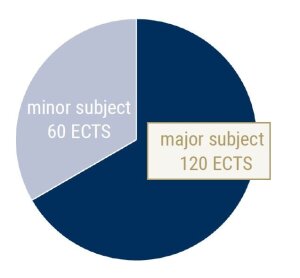
Multi-subject bachelor’s programme
Picture: Sophie BartholomeThe Bachelor's degree is the first professional qualification. The standard period of study|regular programme length is six semesters in total, during which various forms of courses (e.g. seminars, lectures or tutorials) are offered for the individual modules.
A multi-subject Bachelor's degree consists of a major subject with 120 credit points (abbreviation: LP / 1 LP = 30 hours of attendance, preparation and follow-up work|follow-up activity, learning and assessed coursework and examinations) and a supplementary subject with 60 LP.
Career opportunities:
A bachelor's degree in Indo-European Studies qualifies you for jobs that focus on cultural, communicative and linguistic skills, such as
You should be interested in ancient languages and foreign cultures. You will have to learn a number of individual languages in the course of your degree programme and work on theoretical issues in Linguistics as well as the reconstruction techniques of historical-comparative linguistics.
A university entrance qualification, such as a general secondary school leaving certificate, is required for admission onto the study programme.
More information on university entrance qualifications can be found here.
Latinum and knowledge of Greek; proof by the time of registration for the Bachelor's thesis at the latest
Zwätzengasse 12
07743 Jena
Google Maps site planExternal link
Zwätzengasse 12
07743 Jena
Google Maps site planExternal link
Bachstraße 18k
07743 Jena
Telephone hours:
Mondays and Fridays (9:00 – 11:00)
Wednesdays (13:00 – 15:00)
The ASPA is primarily responsible for students in the Faculty of Social and Behavioural Sciences, the Faculty of Arts and Humanities, and the Faculty of Theology.
Postal address:
Akademisches Studien- und Prüfungsamt
Fürstengraben 1
07743 Jena
University Main Building / SSZ
Fürstengraben 1
07743 Jena
Google Maps site planExternal link
Office hours:
We offer consultations in person, by telephone, and via Zoom. You can make an appointment by calling us on +49 3641 9-411111 (Mondays to Fridays from 9:00 to 11:00) or outside these office hours on +49 3641 9-411200. You can also use our remote help desk.
Consultation hours:
Mondays, Tuesdays, Thursdays and Fridays (9:00 to 12:20), Tuesdays (14:00 to 18:00), and Wednesdays and Thursdays (14:00 to 16:00).
Video chat: To the video chat – Zoom Videochat ZeitenMondays to Fridays (12:30 to 13:00) Password ZSB2020 Data protection informationpdf, 101 kb
University Main Building, Room E065
Fürstengraben 1
07743 Jena
Google Maps site planExternal link
Opening hours:
Information Desk (UHG; Room E0.65)
Mondays (10:00 – 12:00)
Tuesdays (13:00 – 15:00)
Wednesdays (10:00 – 12:00)
Thursdays (13:00 – 15:00)
Fridays (10:00 – 12:00)
You can also use our remote help desk at
www.uni-jena.de/service-ssz
or send us your enquiries by post.
Telephone hours:
Mondays to Fridays
(9:00 – 11:00)
Postal address:
Friedrich-Schiller-Universität Jena
Studierenden-Service-Zentrum
07737 Jena
University Main Building
Fürstengraben 1
07743 Jena
Google Maps site planExternal link