The rapid advance of digitalisation has far-reaching effects on the economy and society. Digital technologies have already fundamentally changed the way we live, work and shop. Companies of all kinds - from established corporations to SMEs and start-ups - can use digital technologies to market products and services worldwide, increase customer proximity, develop new business models and optimise business processes. In order to secure and expand competitive advantages in this increasingly digital business world, companies are increasingly dependent on specialists who not only have sound business management knowledge but also the necessary expertise in the (subject) area|field of digital technologies. Above all, companies need support in methodically identifying the potential and challenges of using digital solutions to improve productivity, customer relationships and achieve other strategic aims.
Future-oriented degree programme with excellent career prospects
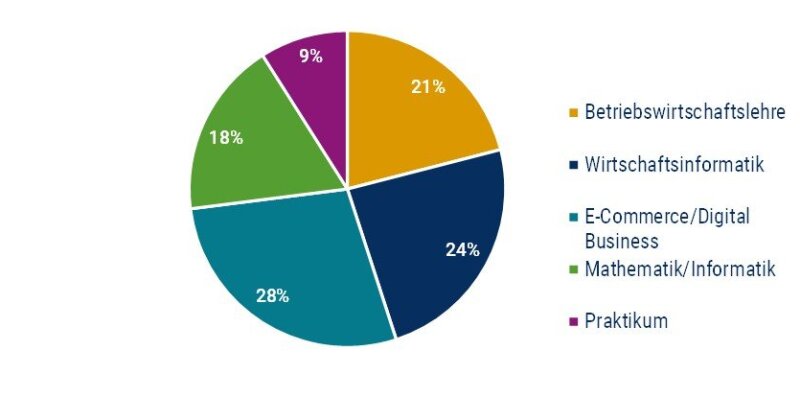
The Bachelor's degree programme in »E-Commerce and Digital Business« aims to optimally prepare students for their tasks in this digitalised business world. The degree programme combines a comprehensive business education (e.g. marketing, corporate management, controlling and logistics) and core topics of Business Information Systems (e.g. databases and ERP systems) with a future-oriented education in the subject areas of e-commerce and digital business in the field of digital business models and technologies (e.g. artificial intelligence, augmented/virtual reality or the Internet of Things). Students learn, for example, which digital innovations are currently emerging, the potential for new approaches in value creation, how the competitive environment and interaction with consumers are changing and how companies can utilise this strategically. The degree programme has a modular structure and thus offers the opportunity to set individual focuses.
In addition to sound theoretical knowledge, a central focus is on the practical relevance of the programme content. This is why we work closely with the local digital economy. For example, students have the opportunity to apply the knowledge they have acquired directly in practical projects with companies or to complete study-integrated internships directly in the companies. This optimally prepares graduates of the Bachelor's degree programme »E-Commerce and Digital Business« for the job market and opens up excellent career prospects.
Digital experience tour via app: Would you like to find out more about studying at the Faculty of Economics and Business Administration-Focus: Business Analytics and are you interested in exciting puzzles at the same time? Click here for our interactive experience tours via app. de